Local Practice Offering Bladeless Cataract Surgery

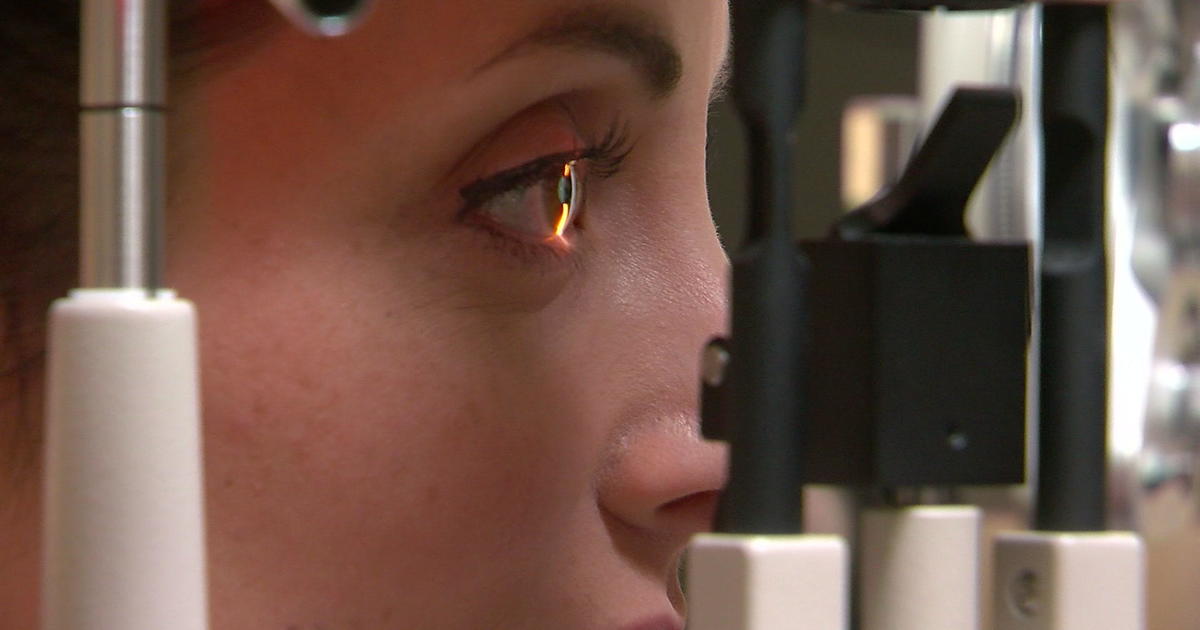
PITTSBURGH (KDKA) -- William Allsopp of Bethel Park is having a cataract removed, all without a scalpel.
"They told me how they were going to do it with a laser, rather than cut it with a knife, and my chances of not having to wear glasses were going to be better," he says.
"I've been an ophthalmologist for 25 years. It's probably the most revolutionary, most exciting change to cataract surgery," says ophthalmologist Lisa Cibik of Associates in Ophthalmology in West Mifflin.
The change is the addition of a machine that uses a laser to "pre-cut" the clear cornea at the front of the eye, and the thin, cellophane-like capsule around the lens.
"You have to dock the patient interface onto the patient's eye. And that was a little bit of a new process and procedure for me," she says.
Sort of like making a perforation line between paper towels, the added two-minute step with the laser makes the incision more precise and uniform in the actual operating room, where the cataract is ultimately removed.
With a perfectly round cut, it's easier to position an artificial lens after the cataract-clouded natural lens is removed. This makes the need for glasses after the procedure less likely. Even the best of surgeons with a scalpel won't make the same exact incision time after time.
Using the laser in this particular way has only been available in the United States for 14 months, with the longest experience of three to four years in Europe.
A group in West Mifflin is the only practice to be offering this in southwestern Pennsylvania. They've been operating with it for almost two months.
In that time, 40 percent of their patients chose to have it done the new way.
"Actually, they've been very positive, very excited, they understand lasers for some reason," says Dr. Cibik.
But because Medicare and insurance does not cover its use, patients must pay $1,000 per eye out of pocket.
And the machine itself is quite expensive.
"Most ophthalmologists cannot afford this. We're talking like a $500,000 laser machine, and $50,000 a year upkeep," explains ophthalmologist Dr. Kevin Clark of Ophthalmology Associates in Sewickley.
Whether the addition of the laser to cataract removal catches on is yet to be seen.
"Because traditional cataract surgery is so safe and effective, it would take tens of thousands of patients in a multi-center trial, and probably several years of follow up to detect any difference in outcomes," Dr. Clark says.
A cataract is when the lens, or the clear, focusing part of the eye, becomes cloudy, usually from age. When it becomes so cloudy, you can't see, and it comes out. For the laser procedure, people with scars on the cornea, or small pupils may not be the best candidates.
RELATED LINKS:
More Health News
More Reports from Dr. Maria Simbra